
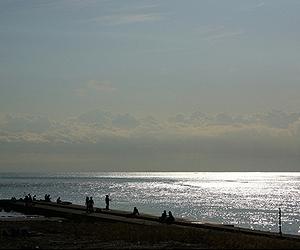
Japan's prime minister said Wednesday he would not appeal a court ruling that ordered the gates of a sea dyke to be opened in a rare judicial defeat for the government after a campaign by local fishermen.
The ruling was upheld Monday in the Fukuoka High Court, in the latest stage of a long-running battle over a project that authorities said was a defence against flooding but opponents criticised as environmentally damaging.
"I made the final decision not to appeal," Prime Minister Naoto Kan told reporters of his decision, which is expected to lead to an opening of the gates in the fiscal year 2012.
"I myself visited the site many times and have my own opinion on this issue."
Japanese governments have for decades invested heavily in public works projects, concreting hillsides, riverbanks and coastlines, in projects that have often been criticised as environmentally harmful pork-barrel exercises.
Kan's Democratic Party government, which took power over a year ago, has decried the public works habit, pledging instead to put "people before concrete".
Japan's central government first planned the seven-kilometre (4.3-mile) dyke at Isahaya Bay in Nagasaki Prefecture in the 1950s to reclaim a coastal wetland for rice cultivation, and later argued it served as a barrier against floods.
But local fishermen who trawl the bay demanded the gates be opened, saying the wetland provided important nutrients for marine life.
The dyke had caused algal blooms or "red tides" and damaged the fishing environment, they said, while campaigners argued the wetland should not be enclosed because it is a key habitat for migratory birds.
However local farmers wanted the gates kept shut because they had cultivated the reclaimed land.
Over the years fishermen staged sit-ins to try to prevent the dyke's construction, and in a 2008 district court ruling the government was ordered to keep open two of the dyke's drainage gates for five years.
Share This Article With Planet Earth
