
Japan's Foreign Minister Katsuya Okada on Tuesday said his centre-left government must justify the expense of the country's US-developed missile defence system to the public.
Japan and its long-standing ally the United States have for years worked jointly on a missile shield of land- and sea-based interceptors against possible attacks, pointing at the threat of North Korea.
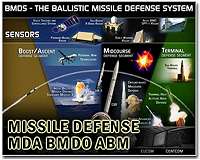
The missile shield in Japan — made up of Patriot Advanced Capability-3 (PAC-3) surface-to-air missiles and the warship-installed Standard Missile 3 (SM-3) — has been set for completion by early 2011.
"I told (a cabinet committee) that the PAC-3 is a very expensive system and that it accounts for a majority of the defence budget," Okada told reporters. "Therefore we should thoroughly explain to the public its effectiveness."
Since taking office in September, Prime Minister Yukio Hatoyama's centre-left government has sought to slash government waste to free up funds, mainly for higher social welfare spending.
The new government has also departed from its conservative predecessors' more hawkish stance and vowed an "equal" relationship with Washington.
Some lawmakers of Hatoyama's Democratic Party of Japan (DPJ) have said Japan should cut spending on the missile defence programme.
Tsuyoshi Yamaguchi, the shadow deputy defence spokesman when the DPJ was in opposition, has told AFP that "missile defence is useless."
Okada has ordered reviews of nuclear-related policies under the conservative governments that ruled Japan almost without break for more than half a century until they were ousted in an August election.
Japan, the only nation to have been hit by atom bombs, has for decades maintained it would not produce, possess or allow on its territory nuclear weapons and has strongly pushed for their global abolition.
But previous governments may have quietly allowed the United States to ship nuclear weapons through Japan, according to documents that have been unveiled in the United States — an issue Okada says he wants out in the open.
Japan, officially pacifist since the end of World War II, has long relied on the United States for defence and nuclear deterrence.
Kyodo News reported this week that officials under former premier Taro Aso lobbied a US congressional taskforce to maintain a strong US "nuclear umbrella" in the face of threats posed by North Korea and potentially by China.
Okada on Tuesday said he planned to investigate that issue as well and told reporters: "Even though the issue is about the previous administration, I'd like to figure out what happened in the past."
Share This Article With Planet Earth
