
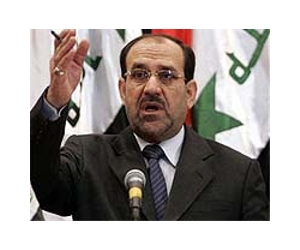
Iraq's highest court told parliament on Sunday to end the deadlock in forming a new government, increasing pressure on Prime Minister Nuri al-Maliki as he fights to secure a second term amid WikiLeaks allegations of state-sanctioned torture.
Federal supreme court spokesman Abdul Sattar Bayrakdar said parliament was ordered to end a recess and convene to choose a speaker, the first step towards forming a coalition in Iraq which has been without a government since March 7 polls.
"In a decision taken today, the supreme court ordered parliament to return to its regular meetings and do its regular work," said the spokesman for the court, whose rulings cannot be appealed.
The Sunni-dominated Iraqiya bloc of former premier Iyad Allawi narrowly won the election with 91 seats in the 325-member parliament, followed by Maliki's Shiite State of Law Alliance with 89.
Neither has been able to muster the majority needed to form a government, despite back-door negotiations with Shiite, Sunni and Kurdish blocs that also won seats.
Bayrakdar said the ruling was the result of an audacious court action launched by a dozen civic groups aimed at ending the political impasse.
The charities and pressure groups brought a case against caretaker parliament speaker Fuad Massum on August 16, accusing him of violating the constitution by leaving the Council of Representatives' first session open, with no progress on the election of a new speaker.
That, they alleged, was blocking the election of a new national president and prime minister.
Massum, who as parliament's oldest lawmaker holds the post, had conceded that leaving parliament's first session open "was a violation of the constitution."
On Sunday, Massum told AFP the court ruling was "a correct decision. I will follow it, and I call on all MPs to do the same," although he had not received notification from the court about when to convene.
The court ruling comes as Maliki supporters are convinced that Friday's WikiLeaks release of secret US military documents on Iraq is a plot to undermine his bid to stay in power.
"Maliki's office destabilised by WikiLeaks revelations," ran a headline in Sunday's independent Al-Mada daily.
The nearly 400,000 pages of documents made available by WikiLeaks chronicle claims of abuse by Iraqi security forces, while others appear to show US troops did nothing to stop state-sanctioned torture, rape and murder under Maliki.
"The documents published by WikiLeaks were carefully chosen" and "the moment chosen to expose them reflects political motivations," said Al-Bayan newspaper, which is close to the premier.
"It is a media campaign against the state and the political process carried out by several groups like the Baathists, regional forces and the new political order," said MP Hassan al-Sinaid, also close to Maliki.
Allawi was a former member of ousted dictator Saddam Hussein's Baath party, and looks to Saudi Arabia for support.
"This is all in the past," Sinaid said of the allegations, adding that "in six months this business will be forgotten."
Maliki supporters believe the allegations are false.
"This information is false and this site lies by publishing these documents years after the incidents," said civil servant Raad Abdel Ghaffar, 42.
"This site wants to sow discord at a time when the political parties are about to agree."
Maliki's office said in a statement on Saturday: "There are some political interests behind the media campaign who are trying to use the documents against national leaders, especially the prime minister."
It did not address the question of the documents' veracity, nor did it detail who was supposedly trying to discredit him or how.
Al-Jazeera television said the leaked papers included US Army reports about Maliki "and allegations of his association with death squads."
In 2006, Maliki created loyalist security units that Iraqis referred to as "dirty forces" for their heavy-handed treatment of suspects.
"It is possible that these documents are being used to topple certain politicians," the independent Al-Alam daily said. "But what about Iraqi blood?" it asked. "Justice for the victims is a necessity."
Share This Article With Planet Earth
