
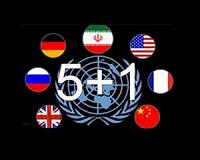
The signatories to the Iran nuclear deal stressed their commitment to the faltering accord during crunch talks in Vienna on Friday, as Tehran vowed to continue to breach limits on its nuclear programme.
Envoys from Britain, France, Germany, China, Russia and Iran took part in the three-hour-long meeting.
Since May, Iran has taken a series of measures, including stepping up uranium enrichment, in breach of the 2015 deal, with another such move likely in early January.
Iran insists that under the agreement it has the right to take these measures in retaliation for the US's withdrawal from the deal in 2018 and reimposition of crippling sanctions.
Since last month, European members have begun raising the possibility of triggering the so-called "dispute resolution mechanism" foreseen in the accord, which could lead to the resumption of UN sanctions on Iran.
Meeting chair Helga Schmid said participants urged Iran to take "all the necessary steps towards full implementation of its nuclear commitments and to avoid further escalatory steps".
"All participants emphasised the key importance of full and effective implementation by all sides as well as their determination to pursue all efforts to preserve the agreement," the senior EU official said in a statement.
Chinese delegation head Cong Fu told reporters that the dispute resolution mechanism — which China is against activating — was not evoked.
"All countries need to refrain from taking actions that may further complicate the situation," the senior diplomat said.
"Bringing this issue to the (UN) Security Council is not in anybody's interest except the US maybe."
Other envoys did not talk as they left the EU delegation, which hosted the meeting.
Late Thursday in a letter to the UN, Britain, France and Germany accused Iran of developing nuclear-capable ballistic missiles.
Iranian Foreign Minister Javad Zarif has dismissed the allegation as "desperate falsehood".
– 'Escalatory cycle' –
Analysts say if UN sanctions are re-imposed and the deal falls apart, Iran could also withdraw from the Treaty on the Non-Proliferation of Nuclear Weapons (NPT).
"It's not clear whether that's worth the benefit," Ali Vaez of International Crisis Group told AFP.
But he warned the risk of the deal collapsing was increasing as Iran was "running out of measures that are easy to reverse and non-controversial".
"Both sides are locked into an escalatory cycle that is just very hard to imagine that they would step away from," he said.
Iranian parliament speaker Ali Larijani has warned that if European partners triggered the dispute mechanism, Tehran may "seriously reconsider" its commitments to the UN nuclear watchdog, the International Atomic Energy Agency (IAEA), which monitors the deal's implementation.
European efforts to shield Iran from the effects of US sanctions by creating a mechanism to carry on legitimate trade with the Islamic republic have borne little fruit, much to Tehran's frustration.
The EU is growing increasingly concerned by Tehran rowing back from its commitments.
The dispute resolution mechanism in the deal has numerous stages, but it can eventually culminate in the UN Security Council voting on whether Iran should still have relief from sanctions lifted under the deal.
In such a scenario, Vaez said, "we will have a major non-proliferation crisis on our hands in the sense that the Russians and the Chinese have already declared they would not recognise the return of (sanctions)".
Vaez said a diplomatic solution would depend on Washington's next moves and whether it would at least be willing to relax its attempts to prevent sales of Iranian oil, a vital source of income for the country.
Iranian President Hassan Rouhani said Wednesday that Tehran is willing to return to the negotiating table if the United States first drops sanctions.
Warning Iran, US slaps sanctions on Iraqi paramilitary leaders
Washington (AFP) Dec 6, 2019 –
The United States on Friday imposed sanctions on three Iranian-backed Iraqi paramilitary leaders over a deadly crackdown on protests in the country, as it warned Tehran to stay out of its neighbor's affairs.
The move comes as President Donald Trump's administration, which considers Iran an arch-enemy, voices alarm at rising attacks on US forces' bases in Iraq blamed on armed Shiite groups backed by Tehran's clerical regime.
"The Iraqi people want their country back. They are calling for genuine reform and accountability and for trustworthy leaders who will put Iraq's national interests first," Secretary of State Mike Pompeo said in a statement.
He announced sanctions on three Iraqis — Qais al-Khazali, Laith al-Khazali, and Hussein Falil Aziz al-Lami — who are part of the Shiite paramilitary force Hashed al-Shaabi.
They were designated under a law that will seize any assets they have in the United States and ban them from visiting.
The United States — which invaded Iraq in 2003 in a controversial war of regime change that led to chaos in the country — has increasingly accused Iran of interference in its neighbor, which shares a Shiite majority.
Some 430 people have died across Iraq as security forces and paramilitaries cracked down on two months of protests triggered by concerns over unemployment and corruption.
Nine more demonstrators were killed Friday after unidentified men in pick-up trucks attacked a building where anti-government protesters had been camped out for weeks, witnesses told AFP.
The demonstrations led to the resignation of prime minister Adel Abdel Mahdi, a close ally of Iran who nonetheless managed a warm relationship with the United States.
– 'Not normal' –
As Iraqi parties seek to form a new government, General Qasem Soleimani — the head of the Iranian Revolutionary Guard Corps' elite Quds Force — has traveled to Baghdad in a show of influence.
David Schenker, the top US diplomat for the Middle East, said that the Iranian commander's presence in Baghdad was "not normal."
"It is unorthodox and it is incredibly problematic and it is a huge violation of Iraqi sovereignty," Schenker told reporters.
"We are encouraging neighbors not to meddle and undermine the constitution of the country," he said.
Schenker did not rule out imposing sanctions on more Iraqis including government officials.
Separately, Pompeo announced sanctions on one Iraqi politician, Khamis Farhan al-Khanjar al-Issawi, on bribery allegations.
– Mulling troops –
The United States says Iran has moved missiles into Iraq and has pointed the finger at Tehran over a rising number of sophisticated but non-lethal rocket attacks on US bases.
In the latest incident, two rockets hit Al-Balad air base, north of Baghdad, late Thursday, US officials said.
"We're waiting for full evidence, but if past is prologue, then there's a good chance that Iran was behind it," Schenker said.
Tensions have soared between the United States and Iran since Trump last year withdrew from a denuclearization deal and imposed sweeping sanctions.
US officials say they are considering sending 5,000 to 7,000 troops to the region to counter Iran, although Defense Secretary Mark Esper on Friday again denied a report that a 14,000-strong deployment was under discussion.
The friction over Iraq comes after Iran itself put down widespread protests that erupted on November 15 following a sudden hike in fuel prices.
