
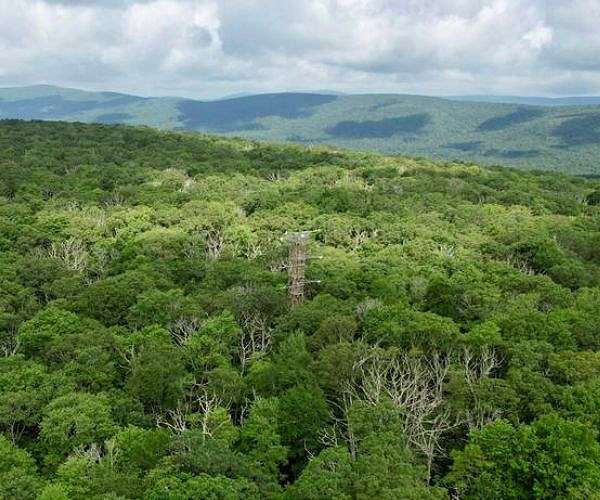
Forests play a crucial role in absorbing carbon by capturing carbon dioxide from the atmosphere, making forest carbon stocks an essential asset in combating climate change. Research published in Ecology and Evolution examined current tree regeneration patterns to develop an indicator of potential changes to future carbon stocks in forests across the northeastern and midwestern United States.
The scientists compared carbon stock predictions based on tree and seedling composition, finding that 29% of plots are likely to lose carbon, 55% are expected to maintain their carbon stocks, and 16% are predicted to gain carbon. Forests projected to lose carbon are generally on steeper slopes, at lower latitudes, and in rolling upland areas.
These findings can assist forest managers in identifying areas most vulnerable to losing carbon storage capacity, enabling them to prioritize these areas when developing strategies to enhance tree regeneration and ensure resilient forest carbon stocks.
"It is important to take tree seedlings into account when we are thinking about long-term forest carbon storage because tree seedlings shape the future of our forests," said corresponding author Lucas B. Harris, PhD, of the University of Vermont. "We hope that our work generates discussion about how to manage tree regeneration to promote resilient and carbon-rich forests in the context of threats such as climate change and invasive species."
Research Report:Sapling recruitment as an indicator of carbon resiliency in forests of the northern USA
