
Rivals in the Honduran crisis sent teams to Costa Rica Wednesday ahead of a deadline for stalled crisis talks, as a diplomat suggested they had reached a deal for the conditional return of ousted President Manuel Zelaya.
Amid a flurry of diplomatic activity almost a month after soldiers sent Zelaya away into exile, crisis mediator and Nobel Peace Prize winner Oscar Arias, the Costa Rican president, postponed a press briefing to accommodate the new plan to meet the two sides.
"We're traveling to Costa Rica immediately after this news conference is over" said interim foreign minister Carlos Lopez Contreras in Honduras.
A diplomatic source in Costa Rica said that a delegation for Zelaya was also heading to San Jose, and suggested that both sides had reached agreement for Zelaya's conditional return to Honduras.
The deal would oblige Zelaya to respond to crimes he is accused of by the country's courts, and would return de facto president Roberto Micheletti to head the Congress, the diplomat said, requesting anonymity.
Costa Rican President Arias on Sunday warned that Honduras was on the brink of civil war and pleaded for crisis talks to resume after a 72-hour break.
Representatives of the interim leadership that backed Zelaya's ouster on June 28 rejected a proposal by Arias on Sunday that Zelaya return as president in charge of a "reconciliation" government.
But they "maintain their position for dialogue and wish to preserve peace and tranquility in Honduras," a statement said Wednesday.
Despite increasing international aid freezes and insistence on a return for Zelaya, the de facto leaders have maintained that he will be arrested if he attempts to come back.
Zelaya, exiled in neighboring Nicaragua, has said he would return "by air, land or sea" shortly after the deadline expires.
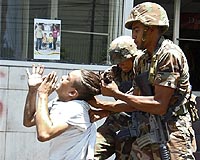
But Hondurans remains deeply split over the possibility of his return, with many fearing more violence after Zelaya's spectacular first attempt left at least one protester dead in clashes with soldiers.
Hundreds of white-clad demonstrators on Wednesday protested against Zelaya's return in the capital of an increasingly polarized Honduras.
"We don't like you, Mel," one banner read in Wednesday's demonstration, using Zelaya's nickname.
A top European official meanwhile called on both sides to lower the tension, after the European Union this week suspended 65.5 million euros in aid to Honduran institutions, although not humanitarian aid.
"Everything must be done so there is a peaceful solution, not a military confrontation," External Relations Commissioner Benita Ferrero-Waldner said in Mexico, expressing support for Arias's proposal of a national unity government.
Lawmakers in Honduras meanwhile approved the country's 2009 budget in a move that had been paralyzed under Zelaya.
Zelaya had boosted spending on social programs as he moved increasingly to the political left after being elected on a centrist platform in 2005.
Many Honduran lawmakers, judges and military leaders believe Zelaya triggered the country's crisis by pushing ahead with a June 28 referendum, without congressional approval, on changing the constitution.
Venezuela, whose President Hugo Chavez is a key backer to Zelaya, on Tuesday angrily rejected what it called an "absurd" demand from the de facto leaders that gave Venezuelan diplomats until Friday to leave the country.
Share This Article With Planet Earth
