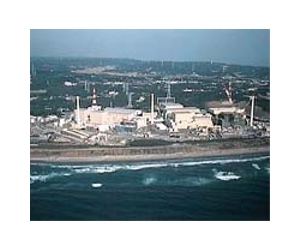
The suspension of Japan's Hamaoka nuclear plant, located near a tectonic faultline southwest of Tokyo, may cause electricity supply problems this summer, Japan's economy minister said Tuesday.
"There is a chance it would give rise to a slight electricity shortage during the summer peak," economy minister Kaoru Yosano said at a regular news conference.
Chubu Electric on Monday said it would comply with Prime Minister Naoto Kan's request to close the plant temporarily, more than eight weeks after a massive quake and tsunami damaged the Fukushima Daiichi nuclear plant northeast of Tokyo, sparking the world's worst atomic crisis since Chernobyl in 1986.
Seismologists have long warned that a major quake is overdue in the Tokai region southwest of Tokyo where the Hamaoka plant is located. It is only 200 kilometres (125 miles) from the capital and megacity of Tokyo.
Large manufacturers including Toshiba and Toyota have production facilities within Chubu Electric Power's service area, which covers central Japan prefectures and the nation's industrial heartland.
There are fears power supply shortages in the area could force industrial facilities to cut operating hours and reduce the number of employees.
"I think we will see a certain effect on employment and other areas. We must analyse it thoroughly," Finance Minister Yoshihiko Noda told reporters Tuesday, according to Kyodo news.
"There might be spillover effects" on the economy, Noda said. But he added, "Safety (at the plant) must come above all else", Kyodo reported.
The Hamaoka plant accounts for almost 12 percent of the output of Chubu Electric.
Japanese anti-nuclear campaigners have long argued that the seismically unstable area, where two major continental plates meet, makes Hamaoka the most dangerous atomic facility in the quake-prone Japanese archipelago.
Japan, the world's number three economy, endures 20 percent of all major earthquakes and generates about 30 percent of its power from nuclear plants.
The record March quake caused 11 of Japan's 55 nuclear reactors to automatically shut down, while triggering a major crisis at the Fukushima plant.
Tens of thousands of people have been evacuated from a 20 kilometre zone around the complex, which has leaked radiation into the air, soil and sea. Its operator, Tokyo Electric Power, expects to stabilise it in six to nine months.
Power shortages and supply chain problems after the quake led to a record fall in Japanese industrial production in March.
— Dow Jones Newswires contributed to this story–
burs-dwa/dan
Share This Article With Planet Earth