
In a significant stride towards redefining the aerospace and defense industry, RTX engineers have unveiled groundbreaking technologies that promise to enhance the safety and efficiency of electric aircraft and bolster the performance of radar systems. These innovations not only highlight RTX's commitment to pushing the boundaries of technology but also underscore the critical role of engineers in solving complex problems.
Electrifying the Skies with Next-Generation Circuit Breakers
The evolution of electric aircraft represents a pivotal shift in aerospace, demanding technologies that can manage significantly higher power outputs. Traditional circuit breakers, the guardians of electrical systems, are inadequate for this new era.
RTX's Collins Aerospace has stepped up, developing a circuit breaker capable of handling the robust requirements of electrified flight. Josh Swenson, a senior technical fellow and principal engineer at Collins Aerospace, elucidates, "A Boeing 787 relies on over a thousand solid-state circuit breakers, yet only a fraction can manage more than 10 amps. For electric aircraft, this figure is dwarfed by the necessity for circuit breakers that can keep pace with much higher power outputs."
This innovation was born out of a collaboration within RTX, including Pratt and Whitney's contract with NASA's Advanced Air Vehicles Program. The solution? A next-generation circuit breaker designed through sophisticated modeling and simulation, augmented by additive manufacturing techniques, capable of interrupting thousands of amps in under 10 milliseconds.
Overcoming Heat: The Silicon Switch Challenge
The team faced a significant hurdle: managing the excessive heat generated by high voltage, a common issue in traditional metal-based mechanical switches. The solution was found in solid-state, silicon-based switches, which, despite their efficiency, introduced a new challenge of heat management.
Charles Shepard, a principal mechanical engineer at Collins, highlighted the innovative approach to this problem, "Additive manufacturing allowed us to explore new geometries for cold-plate heat exchangers, optimizing thermal performance beyond traditional configurations."
Diamonds: Revolutionizing Radar Systems
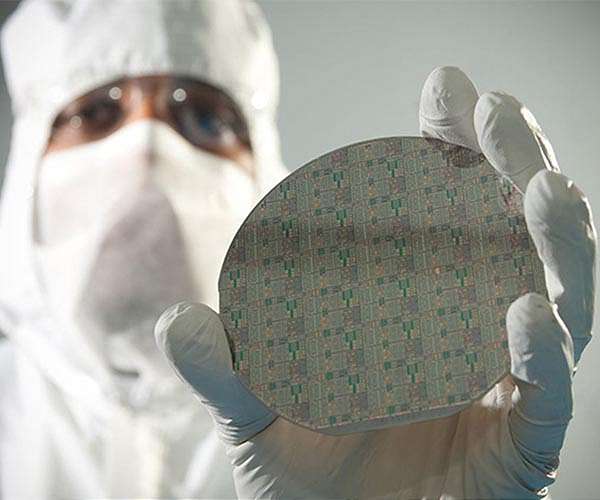
Another groundbreaking RTX innovation involves the use of lab-grown diamonds to enhance the thermal management of gallium nitride (GaN) transistors in radar systems. Matt Tyhach, leading next-generation sensors and microelectronics at Raytheon, an RTX business, shared, "Diamond offers five times the thermal conductivity of silicon carbide, enabling us to significantly improve the performance of our radar systems without the risk of overheating."
This technology, developed in collaboration with the Naval Research Laboratory, Stanford University, and Diamond Foundry, marks a significant advancement in radar capabilities. By integrating lab-grown diamonds with GaN transistors, RTX is set to enhance radar output power and sensing ability substantially, promising a new era for military and defense applications.
