
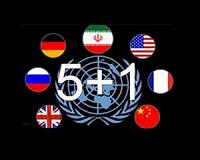
France, Germany and Britain on Sunday called on Iran to return to "full respect" of its commitments under Tehran's 2015 nuclear accord with world powers.
The three European signatories to the deal have sought to salvage the accord intended to limit Iran's nuclear ambitions after it began unravelling when President Donald Trump pulled out the United States in 2018.
"It is essential that Iran return to full compliance with its commitments under the agreement," a joint European statement said.
"We have expressed our deep concern at the actions taken by Iran in violation of its commitments since July 2019. These actions must be reversed."
All three European parties to the pact have maintained their commitment to saving the deal, despite a call by Trump this week to join him in walking away.
The joint statement confirmed their position after Iran's admission early Saturday that it had accidentally shot down the Ukraine International Airlines plane, killing all 176 people aboard.
The three signatory countries and their EU partners shared "fundamental common security interests", said the statement.
One of those interests "is upholding the nuclear non-proliferation regime, and ensuring that Iran never develops a nuclear weapon. The Joint Comprehensive Plan of Action (JCPOA) plays a key role in this respect."
It pointed out that all the remaining parties to the agreement — China, France, Germany, Russia, the United Kingdom and Iran, with the EU as coordinator — were still committed to preserving it.
"We must address — through diplomacy and in a meaningful way — shared concerns about Iran's destabilizing regional activities, including those linked to its missile programme.
"We reiterate our readiness to continue our engagement for de-escalation and stability in the region.
"We note Iran's announcement with regard to the shooting down of UIA Flight PS752 and commit to working with Iran on next steps."
The joint statement came as protests broke out in Iran after the Iranian authorities admitted to downing the Ukrainian civilian passenger plane.
Iran and the US: months of escalating tensions
Tehran (AFP) Jan 11, 2020 –
Tensions between Iran and the United States have been steadily escalating for months with Washington tightening sanctions, Tehran resuming nuclear activity and a series of incidents in the flashpoint Gulf.
Here is a recap:
– Terror blacklist –
On April 8, 2019 Washington declares Iran's elite Revolutionary Guard Corps a "terrorist" group. Its Quds Force, which operates abroad, is also put on the blacklist.
– Nuclear accord unravels –
On May 8, a year after Washington unilaterally withdrew from an international 2015 deal curbing Iran's nuclear programme and reimposed sanctions, Tehran warns it is prepared to resume nuclear activity.
– US drone shot down –
Iran's Revolutionary Guards say on June 20 they shot down a US drone which violated Iranian airspace near the Strait of Hormuz.
Trump approves a retaliatory strike, but cancels it at the last minute.
On June 24, Trump announces "hard-hitting" financial sanctions on Iran's supreme leader Ayatollah Ali Khamenei and senior Iranian military leaders.
On July 18, Trump says the US military has taken down an Iranian drone that came dangerously close to one of its naval vessels in the Strait of Hormuz.
– Saudi oil attack –
On September 14, aerial attacks claimed by Yemen's Iran-backed Huthi rebels spark fires at two major Saudi oil facilities.
Tehran is accused by the United States and other powers of being responsible but denies involvement.
On September 20, Trump announces "the highest sanctions ever imposed on a country", hitting Iran's central bank.
– US strike kills commander –
On January 3, 2020 a US strike kills top Iranian commander Qasem Soleimani, the Quds Force commander, in Iraq.
The killing comes days after thousands of pro-Iranian supporters stormed the US embassy in Baghdad, chanting "Death to America!", angered by US strikes against Hashed bases in Iraq.
Those US strikes, on December 29, had been in retaliation for rocket attacks against US interests in Iraq in which a US civilian contractor was killed.
– Nuclear deal unravels further –
On January 5, Iran announces its fifth step back from the nuclear deal with world powers agreed in 2015, saying it will forgo a "limit on the number of centrifuges".
– Iran missiles –
Iran launches a volley of missiles at Iraqi bases housing US and other coalition troops on January 8, which Khamenei calls a "slap in the face" for the US. There are no casualties.
– Iran 'error' downs plane –
The same day, a Ukrainian passenger jet slams into a field shortly after taking off from Tehran, killing all 176 people on board.
On January 11, Iran's President Hassan Rouhani says a military probe found that "missiles fired due to human error" caused Iran's worst civil aviation disaster since 1988, calling it an "unforgivable mistake".
"Human error at time of crisis caused by US adventurism led to disaster," tweets Iranian Foreign Minister Mohammad Javad Zarif.
