
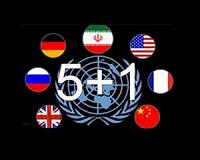
European powers Thursday denounced Tehran's threat to resume nuclear work, drawing a sharp response from the Iranian foreign minister who accused them of caving in to US bullying.
The three European signatories to the 2015 Iran nuclear deal urged the Islamic republic to stick to its commitments after it said it would stop respecting some limits imposed by the agreement.
They rejected an ultimatum from President Hassan Rouhani, who threatened to go further if they fail to deliver sanctions relief within 60 days to counterbalance US President Donald Trump's assault on the Iranian economy.
EU diplomatic chief Federica Mogherini and France, Germany and Britain — the three European nations in the deal — voiced "great concern" over Rouhani's intervention, which came on the anniversary of Trump's withdrawal of the United States from the agreement negotiated under his predecessor Barack Obama.
"We strongly urge Iran to continue to implement its commitments under the JCPOA in full as it has done until now and to refrain from any escalatory steps," they said in a joint statement, referring to the Joint Comprehensive Plan of Action as the deal is known.
"We reject any ultimatums and we will assess Iran's compliance on the basis of Iran's performance regarding its nuclear-related commitments under the JCPOA."
Iranian Foreign Minister Mohammad Javad Zarif hit back on Twitter.
"EU statement today is why JCPOA is where it is: the US has bullied Europe — and rest of world — for a year and EU can only express 'regret'," Zarif tweeted.
"Instead of demanding that Iran unilaterally abide by a multilateral accord, EU should uphold obligations," he said, calling for the "normalization of economic ties."
– New US warnings –
Tensions have soared between Iran and the United States, which has announced the deployment of an aircraft carrier strike group and nuclear-capable bombers to the region, saying it had information of Iranian-backed plots.
"The regime in Tehran should understand that any attacks by them or their proxies of any identity against US interests or citizens will be answered with a swift and decisive US response," Secretary of State Mike Pompeo said in the latest stern US warning.
But with Trump's Democratic rivals accusing him of pushing towards conflict on hyped-up intelligence, Pompeo also said, "We do not seek war."
And Trump — who threatened to destroy North Korea before sitting down with its leader Kim Jong Un for two landmark summits — said he was open to face-to-face negotiations.
"What I would like to see with Iran, I would like to see them call me," Trump told reporters at the White House.
"We don't want them to have nuclear weapons — not much to ask," he said.
Few observers expect any talks soon between Trump and Iran's leaders, for whom hostility toward the United States is a bedrock principle of the 1979 Islamic Revolution that toppled the pro-Western shah.
Trump, a close ally of Iran's rivals Saudi Arabia and Israel, has vowed "maximum pressure" to roll back Tehran's influence in the region. Trump on Wednesday moved to end all of Iran's steel and mining exports after already mobilizing to slap sanctions on all countries that buy its key money-maker of oil.
– EU shouldn't 'get jumpy' –
Europe has stressed the importance of the deal — in which Iran agreed to curb its nuclear ambitions in return for sanctions relief — for its own security, and EU leaders discussed the crisis at their summit in the Romanian town of Sibiu.
French President Emmanuel Macron appealed for calm, saying Europe must work to persuade Iran to stick with the deal.
"We must not get jumpy or fall into escalation," Macron said, warning that leaving the deal would "unstitch what we have achieved".
"That's why France is staying in, and will stay in and I profoundly hope Iran will stay in," Macron said as he arrived for an EU summit in Romania.
Russia, another signatory to the deal along with China, on Thursday denounced the latest US sanctions and said it understood why Iran had decided to suspend some of its commitments — but urged Tehran not to go further.
Since the US pullout, Europe has sought to keep Iran in the deal by trying to maintain trade via a special mechanism called INSTEX to clear payments without falling foul of American sanctions.
The European statement reiterated its commitment to "enable the continuation of legitimate trade with Iran".
But few major European companies want to risk the wrath of US sanctions for the sake of the Iranian market and the country's supreme leader, Ayatollah Ali Khamenei, has dismissed the European efforts as a "bitter joke".
Europe feels powerless as US faces off against Iran
Brussels (AFP) May 9, 2019 –
European powers find themselves powerless to head off a looming clash between the United States and Iran, with no influence over Donald Trump's Washington and fading credibility in Tehran.
Publicly, EU capitals still support the 2015 Iran deal as the best mechanism to keep Tehran's nuclear ambitions in check while easing the sanctions that have crippled its oil-dependent economy.
But as President Trump doubles down on his rejection of the accord and threatens more sanctions, and Tehran responds by threatening to resume some nuclear activity, diplomats are pessimistic.
This week one European official in Brussels admitted to AFP that hopes of saving the deal are getting "weaker and weaker", after the latest EU-US diplomatic encounter laid bare the growing rift.
"No negotiation is possible with the US administration on Iran, on climate, on the Nord Stream 2 pipeline, because President Trump refuses to change his positions," one diplomat said.
This came after EU commissioner Miguel Arias Canete and US energy secretary Rick Perry failed to paper over their many differences at an uncomfortable press briefing.
With the White House bent on confrontation, the only hope of saving the Iran deal-implementation mechanism, the Joint Comprehensive Plan of Action or JCPOA, lies with Tehran.
If Iran's Islamist government continues to honour its side of the accord, Europe will continue to seek ways to deepen economic ties.
But efforts to set up a "special vehicle" to facilitate trade without exposing EU companies to US sanctions have yet to enable a single transaction, and Europe is losing credibility.
Iran now warns it will restart heavy water production and some nuclear enrichment in 60 days if the Europeans, Russia and China are not able to offset the damage of renewed US sanctions.
"For the moment, Iran's announcements are not a violation of nor an exit from the nuclear deal," one senior EU official told AFP, "but the situation is extremely worrying."
On Thursday, Paris, Berlin, London and EU foreign policy chief Federica Mogherini issued a statement rejecting Iran's "ultimatum", but announcing no immediate new action of their own.
Instead they appear to be awaiting a report at the end of May by the IAEA nuclear watchdog on whether or not Iran is in breach of its JCPOA promise to rein it its nuclear programme.
"We don't impose sanctions on the basis of announcements, but the Iranians know perfectly well what they risk if they cross the line," the senior EU official warned.
That line is not yet crossed.
Iran currently holds 124 tonnes of heavy water, and is permitted 130 under the JCPOA. It has 163.8 kilos of enriched uranium, less than the deal's 202.8 kilo ceiling, according to the IAEA.
Iran has also agreed not to enrich this uranium above the level of 3.67 percent, so if international inspectors are correct, it is still far from the threshold for making a weapon.
Nevertheless, Iranian President Hassan Rouhani's announcement dismayed the Europeans as a needlessly provocative tactic, even if there is some sympathy for his domestic plight.
– 'Viable economy' –
"Rouhani is in a very difficult position for economic reasons," a European diplomat told AFP.
Rouhani, who is not Iran's ultimate ruler but serves under Supreme Leader Ali Khamenei, must demonstrate to regime hardliners that he is not standing idle while the accord unravels.
So he was frustrated by what Tehran sees as the Europeans' failure to react when Trump put an end to waivers that allowed some countries to import Iranian crude without facing US sanctions.
Iranian oil exports, which stood at around 1.5 million barrels per day last year, have fallen to 700,000, according to an EU source who warned this is "insufficient to maintain a viable economy".
But even if Europe wanted to help, it is not a big enough client.
European imports from Iran amounted to only 10 billion dollars in 2017, nine billion of that in energy supplies. Iran imported 10 billion in EU products.
"The European Union never promised that it could itself compensate for the effect of US sanctions," an EU official said. "For oil, Iran needs to look to its main clients, India and China."
And what of Europe's special vehicle, now known as INSTEX?
This was set up by France, Germany and Britain to serve as a payment mechanism to allow Iran to trade with Europe without passing through US-controlled commerce in dollars.
Iran is furious that the mechanism has yet to be put to use, but Europe insists that the fault lies with Tehran — saying the Islamic republic has failed to set up a mirror-entity to control its side of trades.
