
Dinosaurs, thought to be long extinct on planet Earth, remain alive in Japan – at least some of the species that helped to shape Japan's post-industrial economy. Such is the impression afforded by Michitsugu Noro, general manager and founder of Clover Display Limited, a 33-year old custom LCD (liquid crystal display) panel maker.
From long locks of greying hair to his affable enthusiasm, Mr. Noro is a reflection of the notion of 'old school.' The 67-year old engineer/industrialist had just finished a pasta lunch, apparently topped off by several glasses of red wine, when JPN caught up with him at the 16th International Laser and Photonics Expo held in April at Odaiba, Tokyo.
"After slaving for a few years right out of college for a big company, working for somebody else just wasn't for me," he says. "The first time I saw an LCD wristwatch in the early 1980s, I knew that making and selling those kinds of gadgets was what I wanted to do."
Back then, LCDs were a new and burgeoning technology looking for commercial applications. The first functional electroluminescent display had only just been invented in 1973 by tech giant Westinghouse Electric. A decade later, Mr. Noro, with the help of three colleagues, began Clover Display, each member of the team represented by one leaf of the plant in its logo.
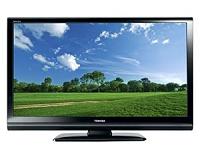
These days, LCD panels are found everywhere from aircraft cockpit displays to mobile phones and digital signs. Global shipments of large-size LCD panels (of at least seven inches) hit nearly 800 million units in 2015, according to data researcher TrendForce. The adoption of 4K resolution, combined with falling production costs, will push up global output of TV panels of at least 50 inches in size by 15% to over 55 million units this year, an all-time high, it predicts.
Small sized LCD panel growth has been even more meteoric, a benefit to Clover Japan, which caters to a niche group of medical equipment and camera makers on an OEM basis. Counting R and D and sales teams in Japan, the firm now sports facilities in Tokyo, Chiba, and Nagano Prefectures and supports 600 workers at its Chinese factory. Mr. Noro puts its market cap as having expanded at about 500 times since the start.
And yet, Japan is not rife with similar success stories, and entrepreneurialism, while not dead, is certainly not highly prized or inculcated. In a 2012 Global Entrepreneurship Monitor (GEM) survey, only 6% of Japanese said they thought there were opportunities to start a business in Japan, and only 9% believed they personally had the skills required to do so. The equivalent figures for the French were 38% and 36%.
Other indicators show that the country has one of the lowest levels of entrepreneurship in the developed world. Columnists, social scientists, and psychologists have cited everything from the low birth rate and the rigid educational system to the nation's relative affluence and persistent economic deflation as causes for a sense of limited ambition among today's young people.
"I was never short on ambition, that's for sure. But kids today are different than a generation ago," says Mr. Noro, who has already handed the reins of his company to his only son and plans to retire soon. "And parents? Well, it's only natural for them to want their children to enjoy the stability of a large established company than a risky startup.
But for me, starting and running my own company was the most exciting time of my life. I have absolutely no regrets."
"I was never short on ambition, that's for sure. But kids today are different than a generation ago, and being born into relative affluence may have something to do with it," says Mr. Noro, who has already handed the reins of his company to his only son and plans to retire soon.
"And parents? Well, it's only natural for them to want their children to enjoy the stability of a large established company than a risky startup. But for me, starting and running my own company was the most exciting time of my life. I have absolutely no regrets."
Mr. Noro predicts even more rapid development in LCD technology, particularly in the potential for panels to become progressively thinner. Right now, the thinnest LCDs produced are still about 3mm; once they get down to the 1mm level, a whole new range of applications will be unlocked, he says.
"You'll start to see them in ATM cards, credit cards, security devices, everywhere. It will be exciting to watch."
