
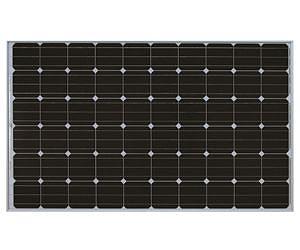
DuPont Microcircuit Materials (MCM) has introduced DuPont Solamet PV416 photovoltaic metallization, a new frontside silver paste material used to raise the efficiency of thin film photovoltaic cells.
This new silver composition has the capability to be processed at temperatures less than 140 degrees C, and provides improved contact resistance, conductivity, adhesion and fine line resolution when printed on Transparent Conductive Oxides (TCOs) – these are key properties for improved performance in Copper Indium Gallium (di)Selenide (CIGS), amorphous silicon (a-Si), and Organic Photovoltaic (OPV) cells and modules.
The material has most recently been adopted at Midsummer AB, where it has demonstrated a 0.5 percent increase in conversion efficiency on stainless steel-based CIGS cells.
"DuPont continues to advance metallization technology for thin film photovoltaics, and Solamet PV416 represents the latest generation of performance improvements," said Kerry Adams, European business development manager- DuPont Microcircuit Materials.
"Working in close collaboration with innovative module makers such as Midsummer gives us insights on how we can engineer materials to meet their needs for easier processing and increased efficiency that strengthen their competitive edge."
"Midsummer offers a unique and cost-effective, turn key CIGS solar cell manufacturing solution with the DUO Line, and we have high standards for metallization paste performance on our stainless steel substrate," said Sven Lindstrom, chief executive officer, Midsummer AB.
"Solamet PV416 enabled us to print fine lines with a high aspect ratio for greater conductivity and gave the best result of the five different brands we have tested, raising the conversion efficiency by half a percent. As we screen print every single cell, instead of scribing large modules, the performance of the metallization paste is of extra importance for Midsummer and its customers."
DuPont Solamet PV416 photovoltaic metallization paste can be processed at lower temperatures than similar pastes used in crystalline silicon cells, and its special chemistry provides essential performance characteristics such as high conductivity, adhesion and line resolution.
With excellent printed conductivity (10mOhm/sq@25micron), low contact resistance (3mOhm.cm2), and superior line resolution (<100 micron), it is ideal for solar cells built on thin film photovoltaic substrates whether flexible or stainless steel.
DuPont MCM will feature its latest thin film photovoltaic and printed electronics ink offerings at Stand E104/D104 at the Printed Electronics Europe and Photovoltaics Europe combined 2012 Conference and Exhibition, which is taking place at the Estrel Conference Center and Hotel in Berlin, Germany, from April 3-4, 2012.
