
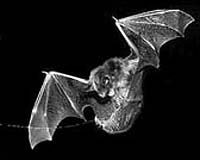
Thanks to a combination of public and private funding, the Nature Conservancy was recently able to purchase a large swath of land from a developer in San Antonio, ensuring the protection of habitat vital to the largest bat colony in the world.
The agreement takes the 5,000-acre property out of the hands of Galo Properties and into the protective arms of the Nature Conservancy; the non-profit conservation group will manage the land and build nature trails across it. Most importantly, the deal will see the Bracken Cave protected. The cave is home to millions of bats. The adult bats rely on the protection of the cave to raise their young in safety.
"Bracken Cave is the largest colony of bats in the world, somewhere between 15 and 20 million Mexican free-tail bats," Nature Conservancy spokeswoman Laura Hutchins told North Country Public Radio. "So they deposit the baby in what we call the nursery section of the cave, which is just millions of hairless baby bats, so when you look at it, it's a ceiling of pink, hairless baby bats."
"The emergence of these millions of bats, as they spiral out of the cave at dusk for their nightly insect hunt is an unforgettable sight," Andrew Walker, executive director of Bat Conservation International, said in the press release. "The protection of Crescent Hills helps ensure this centuries-old wildlife habitat will continue to provide a safe home for one of the region's most unique and important inhabitants."
The conservation effort had strong support from the city of San Antonio, who pitched in $10 million to make the deal happen and thwart plans for a massive suburban housing development. San Antonio City Councilman Ron Nirenberg was one of the loudest proponents of the conservation deal, telling Texas Public Radio that his son would ask every night whether he had saved the bats yet. "It was really thrilling to go home two weeks ago and tell him that we did, finally," Nirenberg said.
The land deal will also help protect habitat vital to the Golden-cheeked warbler and the Edwards Aquifer which flows beneath.
"This land was already permitted to have 3,500 homes — which is to say 3,500 sewer connections — constructed on it," Councilman Joe Krier said. "So 3,500 less sewage connections is a big step in protecting that land and that portion of the Aquifer."
