
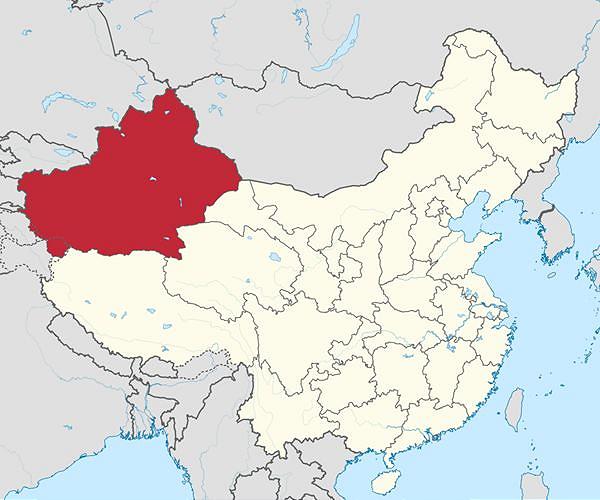
China on Wednesday blasted a decision by Norway's sovereign wealth fund to sell off its stake in a Chinese company due to rights concerns, warning the move may cause "unnecessary losses" to Oslo's interests.
The Norwegian central bank said Monday it would divest from sports brand Li-Ning "due to unacceptable risk that the company contributes to serious human rights violations", after its ethics council linked the company with forced labour in China's Xinjiang region.
Beijing stands accused of having detained more than a million Uyghur and other Turkic-speaking Muslims in political re-education camps across Xinjiang and exploiting them for forced labour.
Human rights groups say they have found evidence of torture and forced sterilisation in the region, and countries including the United States, France and Canada have labelled the situation a "genocide".
Chinese foreign ministry spokesman Zhao Lijian on Wednesday called the accusations a "huge lie concocted by anti-China forces".
He urged "relevant parties … not to be deceived by lies, so as to avoid unnecessary losses to their own interests".
Norway's sovereign wealth fund — known as the oil fund — is the largest in the world and was worth 12,340 billion Norwegian kroner ($1,381 billion) at the end of last year.
At the time, it held 0.59 percent of Li-Ning shares, valued at nearly 1.5 billion kroner — but have since sold them.
The fund is governed by ethical rules that prohibit it from investing in companies involved in serious human rights violations, those that manufacture "particularly inhumane" or nuclear weapons as well as coal and tobacco products.
It dumped Li-Ning following a recommendation from its ethics council, which in an advisory opinion pointed to reports linking the company to "a supplier said to manufacture inside an internment camp", according to the central bank.
China and Norway clashed in 2020 when Beijing temporarily banned imports of Norwegian salmon, warning that the fish was a potential source of Covid-19.
Norway's oil fund divests Chinese clothing brand over Uighur labour
Oslo (AFP) March 8, 2022 –
Norway's sovereign wealth fund, the largest in the world, will sell off its stake in China's Li Ning over suspicions of forced labour use in the Xinjiang region, the fund's manager said.
Li Ning, a manufacturer and trader of sportswear and equipment, was singled out "due to unacceptable risk that the company contributes to serious human rights violations," Norges Bank, the Norwegian central bank, said in a statement late Monday.
The decision followed a recommendation from its Council on Ethics, which in an advisory opinion pointed to reports linking Li Ning to "a supplier said to manufacture inside an internment camp".
China is accused of having interned more than a million Uighurs, a Muslim minority living in Xinjiang, in political re-education camps and exploiting them for forced labour.
At the end of 2021, the Norwegian fund, which was then worth 12,340 billion Norwegian kroner ($1,376 billion, 1,264 billion euros), held 0.59 percent of Li Ning shares, valued at nearly 1.5 billion kroner, which it has now sold.
In contrast, it has removed South Korean textile group Hansae Yes24 and Taiwanese Nien Hsing Textile from its watch list — the step before companies are excluded – because it believed there was no longer reason to suspect systematic labour rights violations in their factories.
Meanwhile, it placed Canadian aircraft manufacturer Bombardier "under observation" over allegations of corruption in six countries over a period of more than ten years (2004-2016).
When it finalised the sale of its transport division to France's Alstom in early 2021, Bombardier had issued a 250 million euro bank guarantee to the French company to cover expenses related to these cases, the ethics board noted.
Also placed under observation was India's Adani Ports, because of its business dealings with the junta in Myanmar, and South Korea's Hyundai Glovis, because of its activities involving the beaching of boats in Pakistan and Bangladesh where they are broken up for scrap.
Finally, the fund also removed San Leon Energy from its blacklist, as the Irish oil company had ended its incriminating activities in Western Sahara.
As one of the world's largest investors, the Norwegian wealth fund — known as the oil fund — is governed by ethical rules that prohibit it from investing in companies involved in serious human rights violations, those that manufacture "particularly inhumane" or nuclear weapons, as well as coal and tobacco products.
