
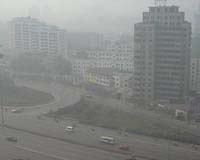
China said Thursday it was making progress in its efforts to improve the nation's energy efficiency and cut pollution emissions, but acknowledged that not enough was being done.
"The results of our energy consumption and emission reduction (efforts) are starting to show," Xie Zhenhua, deputy head of the National Development Reform Commission, told a press briefing.
"But the situation is still grave… we have not yet completely reached our targets and if this trend doesn't reverse, it will have a great impact on our… goals."
China has set targets to reduce energy consumption per unit of gross domestic product by 20 percent and cut key pollution emissions by 10 percent between 2006 and 2010.
Xie said China's energy consumption per unit GDP in the first nine months of this year was three percent lower than the same period last year. The full-year goal is four percent.
However this appeared to contradict an assessment given by Chinese Premier Wen Jiabao this month when he said the amount of energy consumed per unit of GDP had fallen by only 1.8 percent in the first nine months.
No reason for the contradiction was given.
Last year, China only managed to lower its energy consumption per unit of GDP by just 1.2 percent, well off the four percent target.
Xie also said emissions of sulphur dioxide, a key air pollutant, and chemical oxygen demand, a measure of water pollution, had dropped.
He did not give figures but China's environmental watchdog had earlier said emissions of sulfur dioxide declined 1.81 percent in the first nine months of the year, while chemical oxygen demand was 0.28 percent lower.
Xie said a series of steps has been taken by the government this year to cut greenhouse gases and improve energy efficiency, including the closing of outdated coal-fired plants and steel factories.
Economic incentives had also been introduced to encourage industries to phase out inefficient technologies.
