
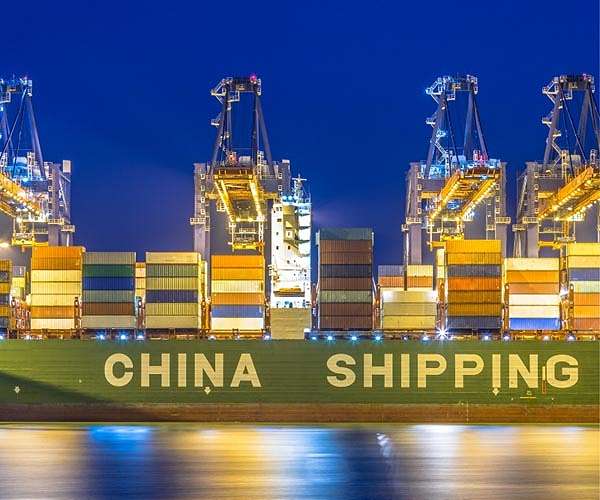
China's exports grew slightly slower than expected in July while imports surged, official figures showed Wednesday, as the world's second-largest economy charts an uneven recovery.
Overseas shipments expanded 7.0 percent on-year last month, according to China's General Administration of Customs.
That compares with the 8.6 percent increase recorded the month before and short of the 9.5 percent forecast in a Bloomberg survey of analysts.
Beijing is seeking to achieve annual national growth of around five percent this year, a target considered ambitious by many observers.
Exports have historically served as an important engine for economic activity in China.
And they have now expanded for four consecutive months, following a year-on-year decline of 7.5 percent in March.
However, imports jumped 7.2 percent in July, more than twice as much as expected and after a surprise drop in June.
Since China's abrupt scrapping of stringent Covid control measures in late 2022, an anticipated return to economic vitality has proven elusive.
The economy is battling number of headwinds including a prolonged debt crisis in the vast property sector, high youth unemployment and sluggish consumer spending.
The uncertain economic situation has weighed on Chinese purchases of goods and services from abroad.
China maintains a trade surplus, which shrank to $84.65 billion in July from $99.05 billion in June.
China says to crack down on fentanyl chemicals
Beijing (AFP) Aug 7, 2024 –
China will impose fresh controls on chemicals used to make the synthetic opioid fentanyl, after several rounds of talks between Beijing and Washington aimed at cracking down on the deadly trade, both countries said.
Beijing's decision to impose controls on the three chemicals used in the production of the drug represented a "valuable step forward", the White House said Tuesday.
In a statement released this week, Beijing's Ministry of Public Security said the three chemicals — 4-AP, 1-boc-4-AP, and Norfentanyl — had been added to a list of substances whose production and sale is subject to greater scrutiny.
The ministry also requires companies producing the chemicals to acquire permits before transporting them.
The rules come into force from September 1, the ministry added.
At a meeting with US President Joe Biden in November last year, Chinese leader Xi Jinping pledged to clamp down on the fentanyl trade.
It is the third such move since the United States and China agreed to resume drug cooperation after the Xi-Biden meeting, which was aimed at managing tensions between the two superpowers, the White House said.
US and Chinese officials met to discuss the issue last week, Washington added.
The US Drug Enforcement Agency previously described China as "the main source for all fentanyl-related substances trafficked into the United States".
Beijing has denied complicity in the deadly trade, touting its "zero tolerance" drug policies and insisting the roots of the addiction crisis lie in the US.
Fentanyl is many times more powerful than heroin and is responsible for about 75,000 overdose deaths a year, making it the leading cause of death of people aged 18 to 49 in the United States, officials have said.
