
China has warned WTO trading partners it will not open its markets for three key agricultural products, provoking a sharp response from several developing countries, a diplomat said.
"China is becoming a major problem. It is going back on a lot of its promises," said a diplomat on condition of anonymity.
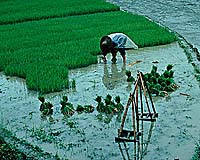
On the seventh day of trade liberalisation talks in Geneva, Chinese delegates warned that their country intended to protect its rice, cotton and sugar production.
It would not lower its tariffs on these products, the diplomat said.
Negotiators have been meeting at the World Trade Organization over the past week in a bid to nail down a pact that would see countries lowering trade barriers such as tariffs and trade-distorting subsidies.
On Friday night, there was talk of a "breakthrough" as seven key trading powers agreed on a basis to move negotiations forward.
New proposals include a requirement for developing countries to cut tariffs on agriculture imports by up to 36 percent.
But they also allow developing countries to define 5.3 percent of products as "sensitive" on which less tariff cuts would be required.
In addition, about 12 percent could be classed as "special" products, for which the cuts would not go above 11 percent. Five percent of these special products would also not be subject to any cuts.
According to the diplomat, China has also warned that it would not participate in any negotiations on so-called sectorals on the industrial products issue, irritating Thailand, Taiwan, Uruguay and Paraguay.
Sectorals refer to agreements to remove tariffs on specific sectors.
