
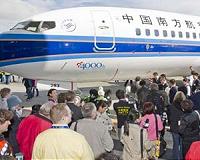
China Southern Airlines, which has the biggest fleet of aircraft in China, ordered on Friday 80 medium-haul Airbus A320 planes with a list value of $7.9 billion, Airbus said.
The deal, worth a headline equivalent of 5.8 billion euros, is for 30 of the existing models of the A320 and for 50 of the more energy-efficient A320Neo planes, Airbus said.
China Southern Airlines, in a statement to the Hong Kong stock exchange, said that it had obtained a discount from the list prices, as is usual in the airline industry.
The aircraft are to be delivered from 2016 to 2020.
China Southern Airlines already has a fleet of 249 Airbus aircraft, including five superjumbo A380 planes.
The airline, in its stock market statement, said that the latest planes ordered would increase its capacity as measured by tonnes carried per kilometre by 12.0 percent.
Airliner manufacturers, principally Airbus and its US rival Boeing, took bumper orders for new aircraft last year as airlines looked to renew their fleets after the financial crisis, and to gear up for forecast strong growth in airline traffic, particularly in emerging markets, in Asia and in China.
Hong Kong 2014 first-quarter GDP up 2.5% on-year
Hong Kong (AFP) May 16, 2014 –
Growth in Hong Kong's economy remained "moderate" year-on-year in the first quarter, dragged by sluggish exports affected by a lack of progress in advanced economies, officials said Friday.
Gross domestic product grew 2.5 percent in the first three months of the year ending March 31, compared to the same period last year, a government statement said.
The figure was lower than the previous quarter's 2.9 percent, but beat the median forecast of five economists polled by the Wall Street Journal, who expected growth of 2.2 percent for the quarter.
"Merchandise exports were sluggish, reflecting the slow improvements in the advanced markets," government economist Helen Chan said in the statement.
Total export of goods declined "markedly" to a year-on-year growth of 0.5 percent in the first quarter, with weak demand in advanced economies also weighing on regional trade in Asia.
"With the advanced economies likely to show faster growth in the coming quarters, the ensuing better trading environment should bring support to Asia's exports," Chan said.
Growth in domestic demand, a key factor in Hong Kong's economy, was steady with private consumption expenditure growing two percent year-on-year, but the figure was lower than the preceding quarter's 3.6 percent growth.
Domestic demand for the first quarter was also helped by the city's unemployment rate hitting a 16-year low at 3.1 percent for the quarter.
The government maintained its prediction for a GDP growth of three to four percent for the year on hopes of recovery in the world economy and sustained growth from mainland China.
"The sustained solid growth of the mainland economy will also be another mainstay to Hong Kong's exports going forward. Nonetheless, the external environment is still overcast by considerable uncertainties," Chan said.
Risks including possible changes in interest rate expectations due to the US Federal Reserve's further tapering and geopolitical tensions in Eastern Europe are a concern, she said.
"The outlook for the global economy should hopefully brighten up in the rest of the year, barring unexpected relapse stemming from the normalisation of US monetary policy and the geopolitical tensions."
