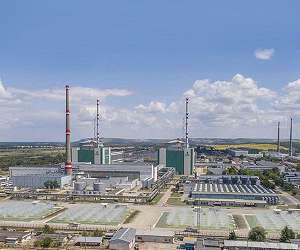
Bulgaria's nuclear safety regulator gave a clean bill of health to the country's sole nuclear power plant at Kozloduy Thursday, following post-Fukushima stress tests commissioned by the EU.
"To date Kozloduy has maintained a high safety level, which does not necessitate any urgent improvement measures," Nuclear Regulatory Agency chief Sergey Tsochev told a press conference.
"However, neither the plant's operator, nor we as a regulator should rest with the idea that everything is wonderful. Instead, we mapped out a series of additional measures to boost safety," he added.
The regulator recommended the purchase of mobile diesel generators for the plant's reactors as well as additional training of personnel to cope with natural disasters and accidents.
Another series of strictly technical improvements was to be implemented in 2012, Tsochev added.
The checks were ordered in the wake of the Fukushima nuclear disaster in Japan last March.
They tested the plant's ability to cope with external safety threats such as earthquakes and flooding, the potential loss of power supply and cooling ability as well as grave accidents at the plant itself.
Apart from the two operational Soviet-built reactors, the tests also looked at the spent fuel pools and dry cask storage, which still hold fuel from four reactors shut in 2002 and 2006.
Tsochev assured Thursday they would all hold in the event of a strong earthquake or flooding from an eventual dam breach upstream on the Danube.
Even if the entire power supply to the reactors was cut, the operator would have at least 16 hours to react, he added.
The regulator also requested a thorough safety review of plans for a second nuclear power plant at Belene, to be built by Russia's Atomstroyexport, although the government has hinted it might drop the deal due to financial constraints and constant price haggling with the Russian side.
Tsochev said the assessment was "extremely positive."