
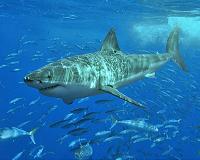
Scientists are speaking out against a proposed shark cull in Australia. Killing large numbers of sharks won't limit shark attacks and could severely damage marine ecosystems, researchers argue.
"If there is a lack of sharks, then fish and other ocean creatures that would otherwise be consumed by sharks will become too numerous and eat too many smaller creatures and so on, meaning that the whole ecosystem changes massively," Robert Day, a marine biologist at the University of Melbourne, said in a news release.
Because sharks often target weak or sick prey, they protect fish species' gene pool and curb the spread of disease. Sharks also scavenge, which keeps ocean waters clear of rotting carcasses.
Even when not actively feeding, sharks' presence helps protect habitats. Grazers don't graze as ravenously when sharks are nearby, which ensures sea grasses and kelp forests aren't mowed down.
A number of studies have made the ecological benefits offered by large predators increasingly clear. But there is little to no scientific evidence showing shark culls work to reduce attacks.
Shark culls can have devastating effects on shark populations. Many shark species are already vulnerable or endangered.
"It doesn't take too much fishing to make their populations unsustainable," Day said.
Most sharks aren't prolific reproducers. Offspring are produced slowly. Because fishermen often catch the youngest sharks, a cull can quickly shrink a local shark population.
Australia's senate is currently considering a cull as one option for curbing shark attacks on the country's beaches.
Decades of data on world's oceans reveal a troubling oxygen decline
A new analysis of decades of data on oceans across the globe has revealed that the amount of dissolved oxygen contained in the water – an important measure of ocean health – has been declining for more than 20 years.
Researchers at Georgia Institute of Technology looked at a historic dataset of ocean information stretching back more than 50 years and searched for long term trends and patte … read more
